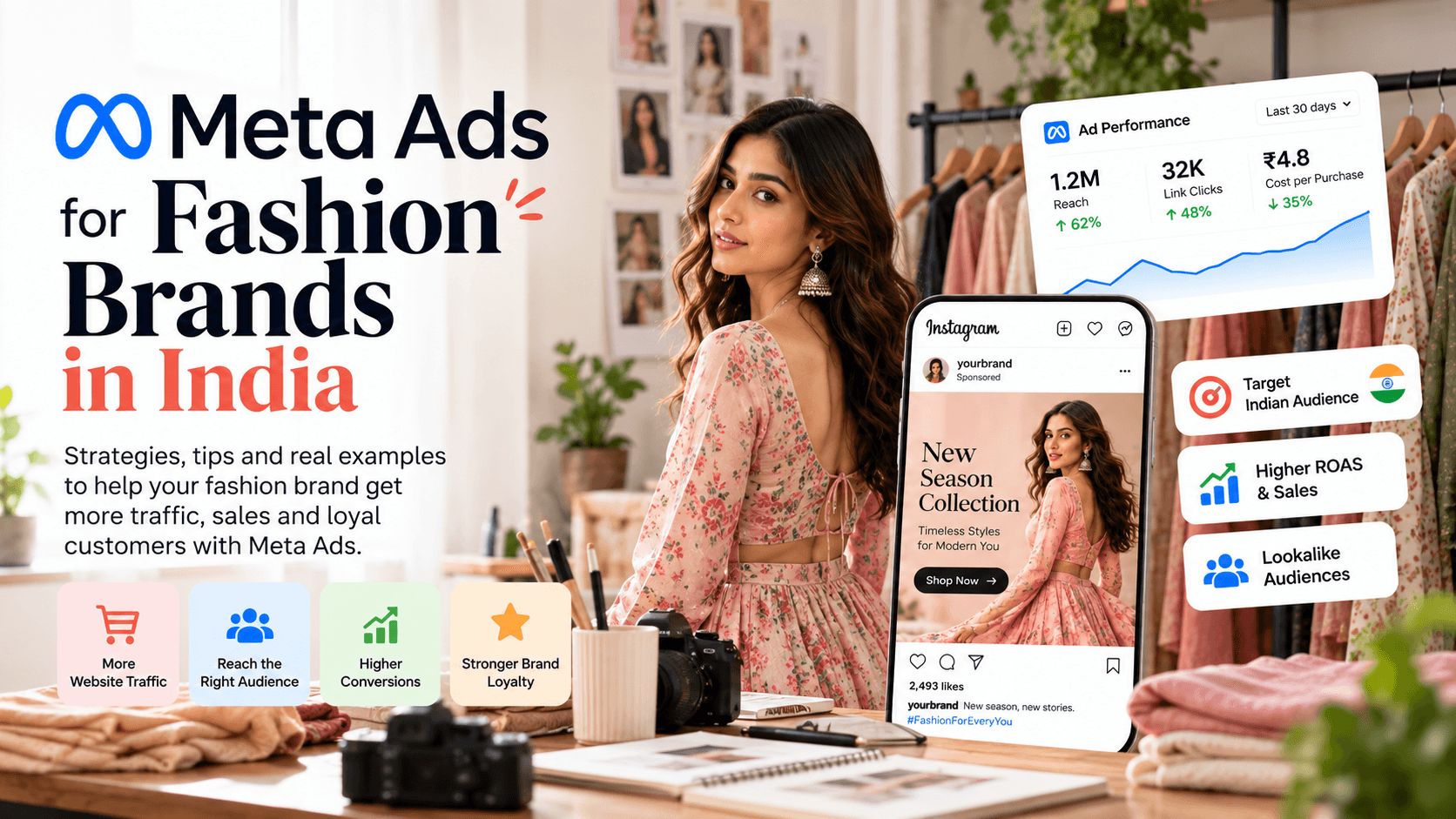
Fashion is one of the most competitive categories on Meta in India. Thousands of brands are chasing the same shoppers, costs rise every festive season, and a creative that worked last month can stop working overnight.
The good news: the brands that win are rarely the ones with the biggest budgets. They are the ones with clean tracking, a simple account structure and a steady supply of creatives that actually persuade. This playbook walks through exactly how to set that up.
The short version: fix tracking first, keep your campaigns simple, spend most of your energy on creative testing, and only scale what has already proven it can sell.
Step 1: Fix your tracking before you spend a rupee
Meta's delivery system learns from the conversion data you send it. If that data is incomplete, the algorithm optimises for the wrong people.
Before launching, make sure you have:
- Meta Pixel installed on every page of your store, including checkout and the thank-you page
- Conversions API (CAPI) connected. On Shopify this takes a few clicks through the Facebook & Instagram channel. It sends purchase data server-side so fewer sales go unreported
- Standard events firing correctly: ViewContent, AddToCart, InitiateCheckout and Purchase, with the correct order value and currency (INR)
- Your domain verified in Business Manager
Use Events Manager's Test Events tool to place a test order and confirm each event arrives once, not twice.
Step 2: Know your numbers
Most fashion brands that "can't make Meta work" never decided what a good result looks like. Work out three numbers first:
| Number | What it means | How to calculate |
|---|---|---|
| Average order value (AOV) | What a typical customer spends per order | Revenue ÷ orders |
| Break-even ROAS | The ROAS where you neither make nor lose money | 1 ÷ gross margin after shipping, returns and payment fees |
| Target CAC | The most you can pay to acquire a customer | AOV × margin, adjusted for repeat purchases |
For fashion in India, returns and RTO (return to origin) on COD orders can quietly destroy your margin. Include them in your break-even calculation, or your "profitable" ROAS will not be profitable at all.
Step 3: Keep the account structure simple
Complicated accounts with dozens of tiny ad sets split your budget so thinly that nothing exits the learning phase. A simple structure works better for most brands:
- Testing campaign. One campaign where new creatives and angles are tested with a controlled budget.
- Scaling campaign. An Advantage+ sales campaign (or a broad-targeting sales campaign) that only receives creatives which have already proven themselves in testing.
- Retargeting. Optional once you have enough traffic. Show collection carousels, reviews and offers to people who viewed products or added to cart.
Targeting in 2026: go broad
Detailed interest targeting matters far less than it used to. For most fashion brands, broad targeting with the right age, gender and location outperforms stacks of interests, because the creative itself does the targeting. A saree ad will find saree buyers; a streetwear ad will find streetwear buyers.
Step 4: Treat creative as your real targeting
This is where fashion brands win or lose. The same product can fail with one ad and sell out with another.
Test different angles, not just different colours of the same ad:
- Problem angle: "Kurtas that don't fade after three washes"
- Occasion angle: "What to wear to a sangeet when you hate heavy lehengas"
- Social proof angle: real customers trying on the product, reviews on screen
- Founder or brand-story angle: why the brand exists, how it is made
- Offer angle: launch discount, free shipping, bundles
Formats that work for fashion
- Try-on videos and "outfit of the day" styles filmed on a phone
- Styling videos: "3 ways to wear this one shirt"
- UGC-style reviews from real customers or creators
- Before and after for fit or shapewear categories
- Carousels of a full collection for retargeting
The first two seconds decide whether anyone watches. Open with movement, a person, a bold statement or a question, never with a logo.
Step 5: Test with discipline
A simple testing rhythm:
- Launch 3–5 new creatives per week in the testing campaign.
- Give each enough spend to judge it. A useful rule of thumb is 2–3× your target cost per purchase before killing it.
- Judge in this order: thumb-stop rate (3-second views) → click-through rate → cost per add-to-cart → cost per purchase.
- Move clear winners into the scaling campaign. Turn off the rest.
- Write down why you think each winner worked, and brief the next round of creatives from those learnings.
Step 6: Scale without breaking what works
When a campaign is profitable, increase budget gradually, roughly 15–20% every few days, rather than doubling overnight, which can reset learning and spike costs.
Other ways to scale:
- Add more winning creatives to the scaling campaign
- Expand to new product categories with their own proven creatives
- Plan ahead for festive season (Navratri, Diwali, wedding season). Costs rise sharply, so build your creative bank and warm audiences weeks before
Step 7: Fix the website, not just the ads
Ads bring people to your store. The store has to close the sale. If your cost per add-to-cart looks healthy but purchases are low, the problem is usually on-site:
- Slow mobile pages (most Meta traffic is mobile)
- Unclear size charts, which also drive returns
- No reviews or real photos of people wearing the product
- A surprise shipping fee at checkout
- Too few payment options, or no COD for first-time buyers
Common mistakes to avoid
- Boosting posts instead of running proper sales campaigns
- Judging ads after one day. Give them enough spend
- Changing too many things at once, so you never learn what worked
- Running the same creative for months until performance collapses
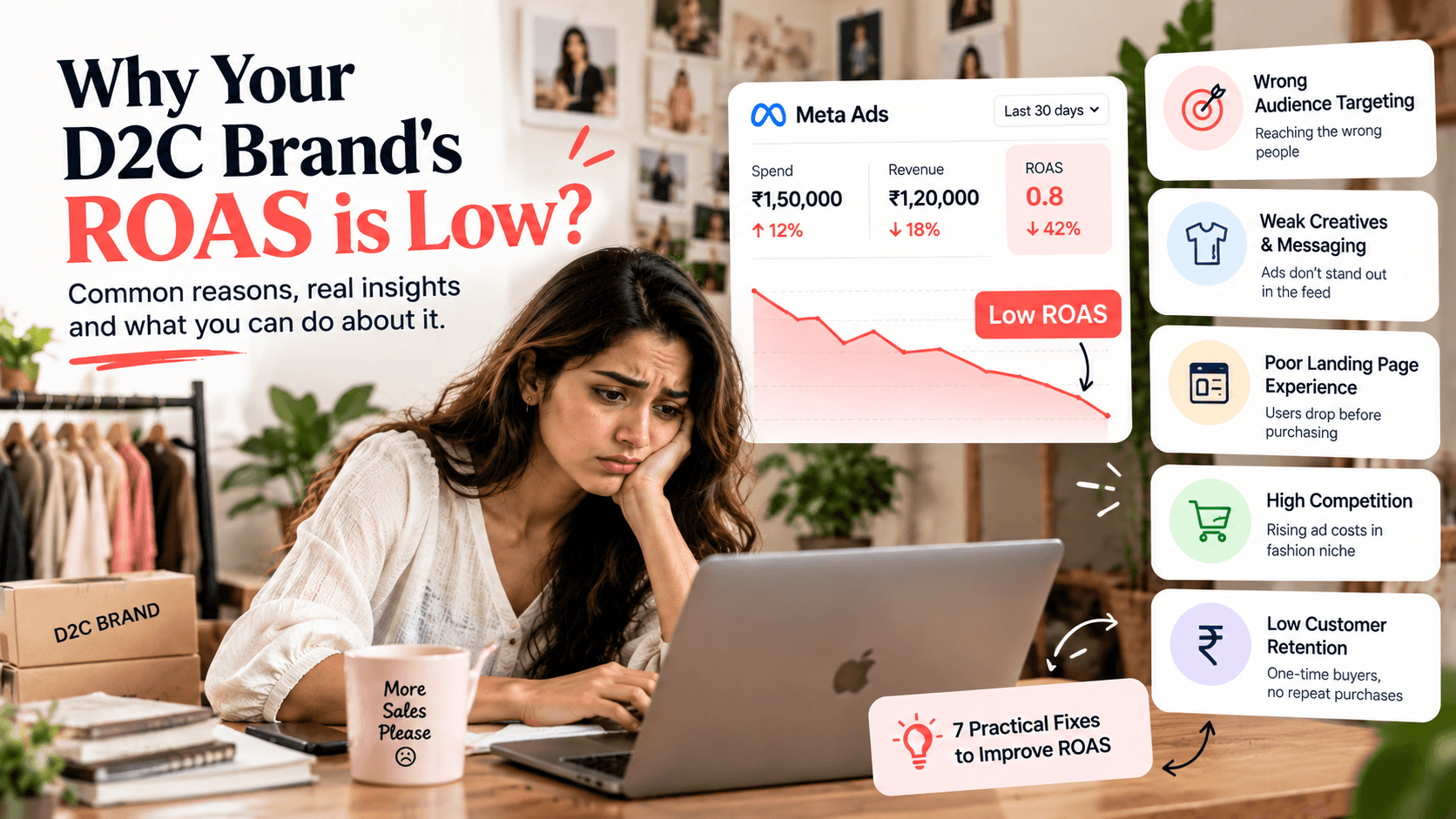
- Ignoring returns and RTO when calculating ROAS
The bottom line
Profitable Meta ads for fashion come down to a repeatable system: accurate tracking, clear numbers, a simple account, relentless creative testing and a website that converts. Get those right and budget becomes a lever you can pull with confidence rather than a gamble.
If you would like a second pair of eyes on your account, our team at Dibiz Studio audits ads, creatives and websites for fashion and D2C brands. See our services.
Frequently asked questions
How much budget does a fashion brand need to start Meta ads in India?
Enough to give each ad set room to exit the learning phase. As a rough starting point, many small fashion brands test with ₹1,500–₹3,000 per day for 2–3 weeks. The right number depends on your average order value and cost per purchase, so set budget from your target CAC, not from what feels comfortable.
Should fashion brands use Advantage+ campaigns?
Usually yes, once you have reliable pixel and Conversions API tracking and a steady flow of purchases. Advantage+ campaigns work best when they are fed many strong creatives. Keep a small manual campaign alongside it to test new angles in a controlled way.
How often should we refresh ad creatives?
Watch the numbers rather than the calendar. When frequency climbs and click-through rate drops on a winning ad, it is fatiguing. For most fashion brands spending steadily, that means adding new creatives every one to two weeks.
What works better for fashion: images, carousels or video?
Short vertical video (Reels format) usually drives the best discovery for fashion, while carousels work well for retargeting and collection launches. Test all three, but make video your default.
Want this done for your brand?
Get a free growth audit. We'll review your ads, content and website and show you exactly where revenue is leaking.